

CERIC Seminar with Lorenzo Feltrin: Workers and the World - Fighting Ecological Crisis from Within
- Date: Tuesday 10 November 2026, 15:00 – 16:30
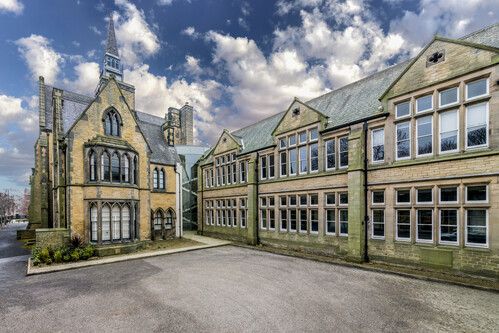
- Location: Maurice Keyworth SR(1.06), Maurice Keyworth Building Woodhouse LS2 9JT
- Cost: Free
This CERIC seminar will be held in a hybrid format and is open to all. If you haven't received a calendar invitation, please email ceric@leeds.ac.uk
Workers and the World: Fighting Ecological Crisis from Within
Lorenzo Feltrin (Ca’ Foscari University of Venice)
We are in the ecological crisis, and not merely as victims of environmental devastation distributed unevenly along intersecting hierarchies of class, race, and gender. We are part of the crisis because we depend on capitalist work – whether our own or that of others – to purchase the necessities for survival. This implies a dependence on the endless growth of commodity production that defines capitalism and fuels the ecological crisis. However, the integration of workers into capital accumulation also possesses an antagonistic dimension, rooted in their very separation from the means of production. Consequently, the working class is potentially a crucial collective actor in addressing the ecological crisis.
The book “Workers and the World: Fighting Ecological Crisis from Within” (Verso, 2026) explores the relationship between labour and ecology by bringing Italian operaismo (or workerism) into dialogue with a wide range of theoretical traditions, from dependency theory to ecofeminism. Drawing on in-depth empirical research across four case studies – two in the Global South (gas extraction in Tunisia and copper processing in Chile) and two in the Global North (fossil fuel refining in the UK and petrochemical production in Italy) – the book addresses four themes in the context of the ecological crisis: automation and deindustrialisation, employment precarity, imperialism and war, and social reproduction. In doing so, it offers insights into the potential for convergence between workplace-based and community-based mobilisations against the ecological crisis.
Lorenzo Feltrin is a postdoctoral researcher at the Department of Humanities at Ca’ Foscari University of Venice. His current research focuses on the political economy of fertilisers and the history of conflicts surrounding the labour-ecology nexus in Porto Marghera, the industrial area on the Venice Lagoon.