

"It's not what you say, it's how you say it" - helping the public respond to risks and emergencies
- Centre for Decision Research
- Analytics, Technology and Operations

The UK government is placing renewed emphasis on public preparedness as part of its national resilience agenda.
Alongside the national risk register, which has been updated with seven new risks, including cyber attacks on our water infrastructure and police systems, the public are being urged to take simple steps to prepare for disruptions caused by global events and severe weather.
However, simply providing information is not enough to change behaviour. How people interpret and respond to warnings can be influenced by a range of factors, including their previous experiences, emotions, beliefs and perceptions of risk.
At the University of Leeds, researchers in the Centre for Decision Research (CDR) are experts in how people perceive risk and uncertainty, and in how public communications can be designed to ensure warnings are understood, trusted and acted upon.
Drawing on their research, members of the CDR share insights into how public warnings can be communicated more effectively across a range of risks and emergencies.
Helping people understand severe weather warnings – Dr Andrea Taylor and Professor Barbara Summers
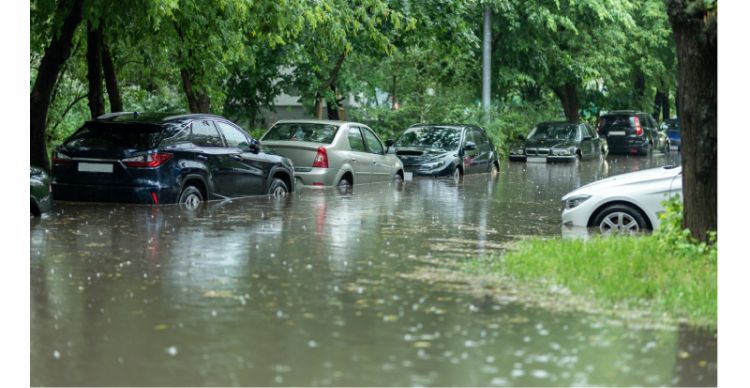
As heatwaves, flooding and other extreme weather events become more common, ensuring that people understand and act on weather warnings is an increasingly important challenge. Through research supported by Lloyd’s Register Foundation’s Global Safety Evidence Centre, we examined data from more than 120 countries to understand what shapes people's perceptions of weather-related risks and how prepared they feel for disasters.
Our findings show that there is no one-size-fits-all approach to risk communication. People living in countries that have experienced more weather-related disasters generally report feeling better prepared (although direct personal experience of severe weather can reduce feelings of preparedness in some countries), while attitudes towards risk and preparedness are also influenced by factors such as gender, education, national income levels and projected future climate impacts. Women, for example, consistently reported greater concern about severe weather but lower perceptions of preparedness.
By identifying six groups of countries with different combinations of preparedness, affluence and concern about severe weather, we found that effective warning messages need to be tailored to their audience. In places where concern is high but preparedness is low, communications should focus on practical actions people can take to reduce their risk. Where preparedness is high but concern is low, communicators may need to raise awareness about risks and ensure people understand how to respond when warnings are issued.
Based on our findings, we recommend that severe weather communications should focus on:
- Providing clear, practical actions that people can take to prepare for and respond to weather-related risks
- Tailoring messages to local circumstances rather than assuming the same approach will work everywhere
- Using trusted and accessible communication channels to reach audiences
- Ensuring warnings explain not only the risk, but also what people should do in response.
Reducing gambling harm through effective messaging – Dr Simon van Baal
Gambling harm prevention messages are everywhere: “gamble responsibly”, “when the fun stops, stop”, “take time to think”. However, messages such as these have often been developed by the gambling industry, and as such, put the responsibility of gambling-related harm on the consumer.
Through our research, a UKRI-funded collaboration with the University of Bristol, we developed and evaluated gambling harm prevention messages from other countries that were independent of the gambling industry. Working with people who gamble, we asked participants to rate each message for its effectiveness, relevance and appropriateness, while also providing detailed feedback.
By combining these ratings with participants' comments, we identified which messages resonate most strongly with different groups of people, from occasional gamblers to those experiencing significant harm.
Based on our findings, we recommend that gambling harm prevention messages should focus on:
- Self-appraisal of the consequences of gambling e.g. “What is gambling really costing you?”
- Emphasising the losses e.g. “99% of gamblers lose in the long run”
- Positive emotional messaging about the alternatives to gambling e.g. “Think of all the money you’ll save by not gambling”
- And counter industry messaging focused on exposing the gambling industry's incentives and tactics e.g. “Gambling products are designed to be addictive”.
Improving food safety communications – Dr Gulbanu Kaptan
Foodborne illness remains one of the UK's most common public health risks, causing an estimated 2.4 million cases each year, with recent evidence suggesting the burden is increasing.
While public health campaigns have traditionally focused on raising awareness of food safety risks, our research at the University of Leeds funded by the Food Safety Research Network of the Quadram Institute shows that raising awareness alone is insufficient to change behaviour.
Building on the Food Standards Agency's Kitchen Life 2 project, we surveyed more than 3,000 UK adults to examine the psychological factors associated with household food safety behaviours. We found that safer behaviours were more strongly associated with social norms and people's confidence in their ability to carry out safe practices than with their perceived risk.
These findings suggest that effective food safety communications should move beyond explaining the risks of foodborne illness and instead make safe behaviours feel practical, achievable and socially expected.
Based on our findings, we recommend that food safety communications should focus on:
- Providing clear, practical guidance that explains exactly what people should do, rather than simply highlighting the risks of foodborne illness.
- Increasing people's confidence by showing that safe food-handling practices are straightforward and easy to incorporate into everyday routines.
- Using positive social norms to reinforce that safe food preparation is the normal and expected behaviour.
- Tailoring messages to different audiences, particularly younger adults, who reported engaging in riskier food-handling practices than older age groups.

Using visual cues to strengthen messages - Dr Xingjie Wei
Warnings and safety messages are rarely just words. They are often accompanied by visual cues, such as photographs, illustrations, or images of people. Our research looks at how people respond to these visual cues, particularly when they have limited information on which to judge the messages itself, which is often the position the public is in when a warning arrives.
In one study, we investigated whether the confidence a fundraising team projects in a photograph affects how much money people will give them. We showed participants only the team photograph, with no information about the project itself, in a market where the technical detail is beyond most investors and there is little else to go on. Teams that appeared more confident in photographs raised significantly more money, regardless of how attractive or intelligent they were perceived to be. When people cannot assess the substance of a message, the cues they can read carry more weight than we might assume.
A second study examined the cross-race effect: the well-documented tendency to recognise and remember faces from one's own racial group more easily than others'. People who have had more contact with a wider range of faces show the effect less. Looking at how audiences in East and South-East Asian countries responded to US films, we found that where a cast contained actors with similar facial features, audiences found it harder to tell characters apart and the film performed less well. But the effect was weaker in countries with higher immigration and higher internet use, where audiences had greater prior exposure to a wider range of faces. This demonstrates that how easily an image is processed depends on who is looking at it.
Based on our findings, we suggest that the visual elements of public safety communication deserve the same attention as the wording, and that those developing the communications should:
- Recognise that people form impressions of a messenger in milliseconds, and that those impressions can influence whether they act on what they are told
- Not assume that the same visual material is equally easy to process for every audience, since ease of processing depends on what people have been exposed to before
- Keep the number of things a viewer must take in at once low, since visual complexity makes any message harder to process.
Understanding how people perceive risk is essential if warnings are to do more than simply inform. Effective communications must help people feel both aware of potential dangers and confident that they can take meaningful action to protect themselves and their communities.
Contact us
If you would like to get in touch regarding any of these blog entries, please contact: research.lubs@leeds.ac.uk
Click here to view our privacy statement. You can repost this blog article, following the terms listed under the Creative Commons Attribution-NonCommercial-NoDerivatives 4.0 International licence.
The views expressed in this article are those of the author and may not reflect the views of Leeds University Business School or the University of Leeds.