Green Innovation Research Shapes Discussion at UN World Investment Forum

Research led by Leeds University Business School has been brought directly into international policy and business discussion at the UN Trade and Development World Investment Forum 2026
The University of Leeds was an official partner of the 9th World Investment Forum (WIF 2026), organised by UN Trade and Development (UNCTAD) in Doha, Qatar.
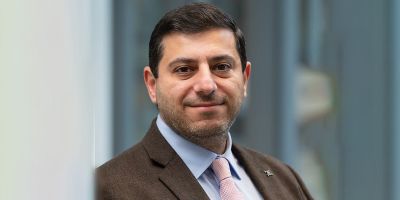
The partnership included an invited workshop designed and convened by Dr Elizabeth Yi Wang, Associate Professor of International Business and Director of Internationalisation in International Business at Leeds University Business School.
The workshop, “Competing Green: An Evidence-to-Action Workshop on Innovation and International Competitiveness”, was developed from research led by Dr Wang and recently published in the Journal of International Business Studies, the leading academic journal in the field of International Business.
Dr Wang is the lead and corresponding author of the study, co-authored with Professor Jeremy Clegg of the University of Leeds and Dr Jiahui Cheng, a former Leeds doctoral researcher.
Rethinking the role of multinational firms in global sustainability governance
The study, “The two Coases of green governance: multinational enterprises and the internalization of environmental externalities through green innovation”, examines how environmental regulation can stimulate green technological innovation and how multinational enterprises can carry the effects of that innovation across national borders.
Drawing on data covering more than 1.4 million green patents owned by multinational enterprises, the research finds that countries with a stronger mix of market-based environmental policy instruments are associated with significantly greater green patenting by foreign multinational subsidiaries operating there.
It also finds that green innovation generated within multinational enterprises in one jurisdiction is subsequently associated with higher net profits in third-country markets.
The research therefore challenges the view that multinational firms should be understood only as organisations responding to environmental regulation. Instead, it shows how their international networks can help extend the effects of nationally introduced green policies beyond the jurisdiction in which those policies originate.
This has wider implications for global sustainability governance. Environmental policy is largely made by national governments, while challenges such as climate change cross national borders. The research suggests that multinational enterprises can provide an organisational mechanism through which policy-induced green innovation travels internationally, complementing intergovernmental approaches to environmental coordination.
Dr Wang said:
“The important question is not simply whether environmental regulation imposes costs on business. Our evidence shows that the design of policy matters for innovation, and that the benefits of green innovation need not stop at national borders.
“Multinational enterprises connect markets, technologies and organisational capabilities across countries. That gives them a potentially important role in translating nationally induced green innovation into wider international economic and environmental benefits.”
From research evidence to policy and business action
The research provided the foundation for the Competing Green Evidence-to-Action Workshop at WIF 2026.
Rather than a conventional academic panel, the session was designed to bring scientific evidence into direct discussion with people involved in policy, business, technology, and international investment.
Seven invited experts contributed perspectives ranging from international policy coordination, capital-intensive industries, multinational operations in Qatar, engineering and technological development, biodiversity and global value chains, EU–GCC sustainability cooperation, to education for green capacity building.
The workshop received strong interest from across the WIF community, attracting participants from governmental and investment agencies, consultancy organisations, the Gulf Cooperation Council (GCC) community, green technology businesses and climate science, alongside researchers and international business specialists.
Dr Wang added:
“The purpose was not simply to present another piece of research. We wanted to put robust evidence in the room with people who make policy, advise governments, invest, develop technologies, and run businesses, and ask what it means for the decisions they are making.
“The response at WIF showed the value of that approach. The workshop has already led to follow-up conversations around how evidence can be used more directly in policy and business practice.”
Building on a long-standing Leeds–UNCTAD relationship
The workshop builds on a relationship between International Business at Leeds and UNCTAD extending over more than two decades, reflecting their shared focus on multinational enterprises, international investment and the global economy.
Dr Wang has worked with UNCTAD in different capacities since 2010. Earlier stages of the green innovation research were presented at the previous two World Investment Forums, and she has also contributed to UNCTAD research on international investment in sustainable infrastructure.
WIF 2026 marked a further development in this relationship. Through the invited workshop, the University of Leeds was listed among the Forum’s official partners, while the Evidence-to-Action format developed and led by Dr Wang piloted a more integrated model of engagement at Leeds, bring academic evidence directly to policy researchers, public bodies, businesses and other international partners to support practical application and follow-on collaboration.
Research paper:
Wang, E. Y., Clegg, J. & Cheng, J. 2026. “The two Coases of green governance: multinational enterprises and the internalization of environmental externalities through green innovation.” Journal of International Business Studies, 57: 1054–1074.
https://doi.org/10.1057/s41267-026-00872-9